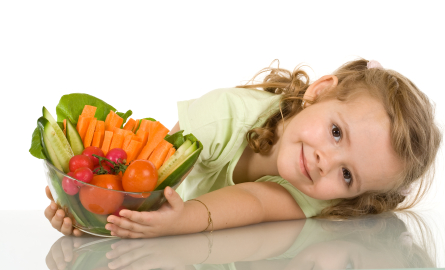
Yeah. My kids have gotten that look. From strangers. From friends. From relatives. Each time they are not allowed that second piece of party cake. Each time the m&m’s people hand out to them are substituted with Sunspire Dots…And that time, while in a long line at a Rite-Aid…
Every time I happen to have them with me, invariably, my son always runs to the little cubby sugar traps by the cash register. This time he grabbed a bag of colorful, sugar-free pops and asked in his then three-year-old-let-everyone-hear-it voice “DO THESE HAVE ARTIFICIALS?” Everyone in the rush hour line look at me in anticipation. “Yes, they do.” I tell my son, in my library voice, trying to compensate for his internal megaphone. The audience in line, like tennis match spectators, move their heads down, waiting for my son’s move. “WHAT DO ARTIFICIALS DO TO YOUR BODY MOMMY?” The spectators move their heads to me. “They make you sick.” Audience looks in the other court. “WHY?” (of course) and before I can answer, Doritos-carrying-man, asks “Yes, why?” and catches me by surprise – but he looked like he really wanted to know. By this time, my audience had grown to a sold-out crowd of all the adjacent lines, clutching their loot of chips and candy, all looking at me mid-munch. I try to muster an anti-processed food elevator pitch…but was saved by “next?”. My ad hoc audience was left with the fading cliffhanger of “well, let me explain……”
When I see a child drinking HFCS-laden soda, or scarfing down nitrite-preserved hormone-injected hotdogs, bags of Doritos, or two big servings of ice cream with 15 ingredients on the list, half of which I cannot pronounce….I can’t help but feel bad for the child. What is available to our kids and what is marketed as OK, and even “healthy” are often…not. Case in point, I never thought I would ever want to wage war against something called “Hugs” but let’s look at the ingredient list:
Water, high fructose corn syrup, citric acid, sodium polyphosphates, artificial flavors, sodium citrate, sodium benzoate (to protect flavor), natural flavor, acesulfame potassium, sucralose, red 40 (punch and grape), yellow 6 and yellow 5 (orange), blue 1 (grape and blue raspberry), ester gum.

100% REAL ARTIFICIAL INGREDIENTS!
Aside from water, there is not one naturally occurring ingredient! NOT ONE. And when you count that “artificial flavors” is actually an FDA catch-all for over 50 artificial ingredients and “natural flavors” a catch-all for over 40 non-natural ingredients – this little “hug” has over 100 chemicals packed in a little cute container with fun colors. Criminal. Why would anyone want these in their body and how did we get to the point where we think that our body can actually process these without damage?
Its education. Or more appropriately, mis-education. Ubiquity legitimization? How can it be that bad for you when everytime you go to a grocery store, you’re confronted with aisle after aisle of food that must be right for you (otherwise, it wouldn’t be there…right?) And don’t get me started on what’s available in schools. I mean, how can it be that bad when schools do it? And everyone is doing it. How can everyone be wrong? And of course (this is my favorite). “I ate this growing up and I’m fine.” Right?
I think that’s why everyone in line at Rite-Aid wanted to know WHY its “bad”. I think, aside from wanting to see whether this conversation with this the 3-year old would end peaceably or not (it did), on some level they wanted to know why I see it differently. When I give talks, even the biggest skeptic comes out with something new that they learned – that’s all I need to plant the seed of awareness. It’s a beginning.
Speaking of beginnings.
Recently, on separate occasions, I had the privilege of listening to Amy Kalafa, Dr. Antonia Demas, Dr. David Katz, Julia Jordan and Alison Carmen. Wow did I have an inspiring couple of weeks. These are individuals trying to change what we feed our kids in institutions whose primary missions are for their welfare – our schools. Amy Kalafa is one of the Two Angry Moms, Dr. Demas (Cornell University) designed the award-winning Food Is Elementary curriculum, Dr. David Katz (Yale University), designed the “Nutrition Detectives” curriculum, Julia Jordan is the founder of Spoons Across America and Alison Carmen is a mom – just like us — who successfully lobbied to change her daughter’s school food. Individuals acting on different levels for the same end. And each one of them succeeding and making little steps toward changing corporate-influenced conventional wisdom.
Its about time.
Last year, the CDC (yes, the CDC, god forbid not some dubious, small progressive advocacy group ;) released the sobering statistic that 1 in 3 in children born after the year 2000 will develop Type 2 diabetes. This year, the number increased even more. This means that majority of these children will develop heart disease sometime (early) in their lives as well if their diabetes is left unchecked. A new study to be released by the American Heart Association shows this trend. Even more sobering, this is also the first generation whose projected life span is shorter than their parents’.
Why?
Because our food — the way we process and produce our food, what is easily available to us, what is convenient given our hectic lifestyles — has changed dramatically in the last 30-50 years. That is one generation. The food that is available to our children now is different from the food that was available to us and significantly different from the food available to our parents. The metaphor I’ve seen a lot is a polar bear in the desert. Our bodies are simply not adapted to it, simply not made for it.
Our children completely depend on the choices we make for them. We have direct influence on what we can do at home but what they get in school…its a little more complicated. And school is where most children eat at least 35 to 40 percent of their daily calories. As parents, there are many ways we can influence and advocate for the food that is being served where they spend most of their waking lives for 13 years.
In 2010, Senate Agriculture Committee chairwoman Blanche Lincoln (D-Ark.) introduced a bill that was passed in March. It is a step in the right direction for the food kids eat in school. “The Healthy, Hunger-Free Kids Act of 2010 boosts funding by $4.5 billion over 10 years. That’s less than half of the $10 billion President Obama called for in his budget. But it is the first time since 1973 that Congress has increased the federal reimbursement rate for school meals.”
A battle victory in the continuing war. And there are many more victories to be had. How to start? Support organizations like the Farm to School Program and the Edible Schoolyard. Contact your Congress person and let them know your child’s health is important to you. Keep reading, attend PTA meetings and share your thoughts, support school garden programs in your area, get inspiration from what others have done (this is a good one and this one too). Every action counts.